Why Work Travel Is Never as Glamorous as It Sounds

Work travel sounds impressive in theory.
It implies momentum. Importance. A calendar full enough to justify a 5:15 a.m. alarm and a gate assignment that changes twice before boarding. There is a certain prestige baked into the phrase “I’m traveling for work,” usually said while standing in a TSA line holding a plastic bag of liquids and questioning every life choice that led here.
In practice, it is far less polished.
It starts earlier than it should. Earlier than any reasonable person would voluntarily wake up. You are alert, but only in the way someone is alert when the stakes are missing a flight. Coffee becomes a requirement, not a pleasure. No one is savoring anything at this hour.
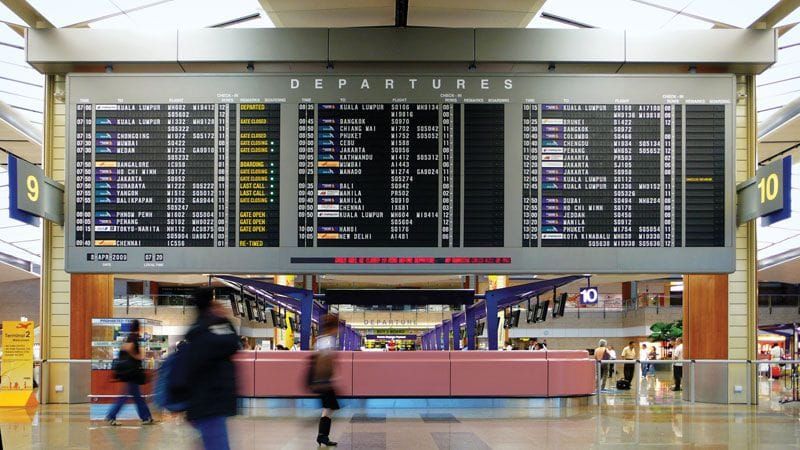
Airports are not glamorous places. They are designed for throughput. The lighting is too bright, the seating is never quite right, and everyone is either rushing, waiting, or doing both at the same time. No one looks relaxed, but everyone is pretending this is normal. You are technically going somewhere, but mostly you are in transit.
Earlier in my career, there was an excitement to it. I would land and immediately start exploring, fueled by adrenaline and the confidence of someone who had never needed a good night’s sleep to function. I walked cities between meetings, found local coffee shops, and treated late dinners like a personality trait. Travel felt like a perk. An expansion.
That version of work travel quietly faded as my responsibilities grew and my priorities shifted.
Now, I get in and out as efficiently as possible. I know which flights minimize disruption. I skip the extras. I am no longer here to explore. I am here to execute and return home before anyone notices I’m gone. The trip is no longer about the place. It is about the purpose.
Work still happens, of course. Emails arrive. Meetings stack. You just take them from a gate, an uber, or a hotel room desk that was clearly designed by someone who has never worked a full day at one.
Hotel rooms are their own kind of uncanny. They are clean in a way that feels temporary. The art is generic. The chair is decorative, not functional. It exists solely to hold yesterday’s blazer. You lay out your things the same way every time, trying to make the space behave like home, knowing it never will. The routine is familiar, even if the room is not.
Meals are irregular. You eat because it is the time available, not because you are hungry. Breakfast is whatever fits in a paper bag. Lunch happens between sessions. Dinner is either too late, too heavy, or eaten alone in silence while scrolling through photos from home.
When you manage diabetes, meals are also math. Timing matters. What you eat matters. When you eat relative to movement, stress, and sleep matters. An insulin pump helps, but it does not remove the need to anticipate what is coming next in a day that refuses to be predictable. Sometimes this is basic arithmetic. Sometimes it is advanced math, performed quickly, in public, with incomplete information. You estimate. You adjust. You hope for the best and promise yourself you will deal with the consequences later, often in a different time zone.
There is also the constant low-level awareness that you are off schedule everywhere else. You are not where you usually are. You are not doing what you usually do. Life continues without you for a few days, and you are both grateful for that and slightly unsettled by it.
At home, you try to keep things as normal as possible. Bedtime still happens. Stories are still read. Songs are still sung. You FaceTime from a hotel room, holding the phone at just the right angle, hoping the connection holds long enough to feel like you were there. Sometimes it works. Sometimes the delay or the distraction makes it harder instead of easier. Toddlers, it turns out, are not known for their patience with hotel Wi-Fi. You hang up knowing you showed up the best way you could, even if it did not feel like enough.
The glamour myth suggests room service and quiet evenings. The reality is calendar math, time zone math, and the mental effort of being fully present in unfamiliar places without the usual supports. You are professional, prepared, and on, while carrying your entire life in a carry-on that somehow never has enough room.
By the time you return home, you are tired in a specific way. Not just physically, but contextually. You have switched environments repeatedly. You have adapted over and over again. The trip may have been successful, productive, even worthwhile. But it was not effortless.
That is the part people do not see.
Work travel is not a vacation with a laptop. It is work, relocated. It asks for flexibility, stamina, and a tolerance for mild discomfort that becomes more noticeable the older you get and the fuller your life is at home.
And still, it serves a purpose. Face-to-face matters. Some conversations are better in the same room. Showing up counts.
The glamour, if it exists at all, is very small. It lives in moments like boarding the return flight, closing your suitcase for the last time, or opening your front door knowing you will sleep in your own bed.
Those moments are not impressive. They will not be photographed.
But they are real.