Confidence Is Not Competence (And Florida Just Gave Us a Case Study)

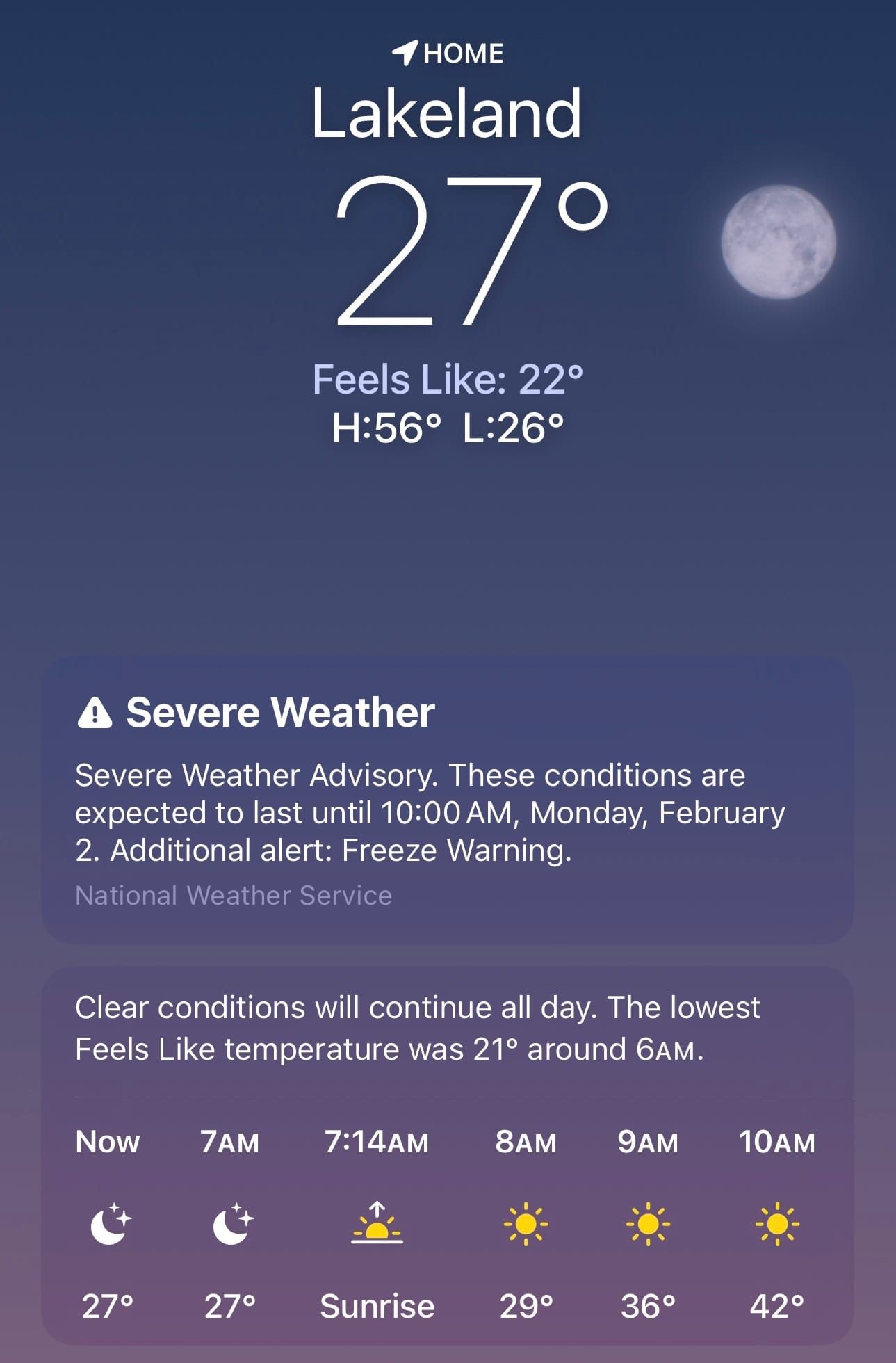
Florida got cold this week.
Not Midwest cold. Not “snowblower” cold.
But cold enough for a state built around heat, air conditioning, and flip-flops to feel it.
Temperatures dipped into the 30s and even the 20s overnight in places that rarely experience sustained cold. When that happens, it doesn’t just make people uncomfortable. It puts stress on systems that were never designed to operate this way for long.
That’s the context.
What followed was a masterclass in something else entirely.
Across multiple local Facebook groups, I watched the same pattern play out on completely different topics. One conversation was about electricity. Another was about emergency shelters. Same tone. Same confidence. Same misunderstanding.
And it led to a simple conclusion:
We are living in a moment where confidence plus strong feelings is being mistaken for actual understanding.
What People Thought Was Happening
According to the loudest voices online:
- Utilities were “controlling” people by asking them to reduce usage
- Churches were failing morally by not instantly becoming shelters
- Ovens and propane heaters were clever alternatives
- Feeling strongly meant being right
None of that was true.
All of it was loud.
What Was Actually Happening
Cold weather causes a sudden, simultaneous spike in electricity demand in Florida. Many homes rely on electric heat strips or heat pumps that struggle in low temperatures. When everyone’s system turns on at the same time, especially in the early morning, the grid experiences real strain.
Utilities respond by asking customers to shift nonessential electricity use during peak hours, typically 6–9 a.m., to prevent outages. This is standard practice. It’s boring. It works. It is not tyranny.
At the same time, colder temperatures increase risk for unsheltered people and other vulnerable populations. That’s why designated warming centers exist. They are staffed, insured, and coordinated with emergency services.
None of this is controversial among people who actually work in these systems.
Systems Don’t Run on Vibes
Here’s where the disconnect shows up.
Power grids do not operate on intentions.
Emergency shelters do not materialize because of moral outrage.
Public safety does not respond to how strongly you feel.
These systems run on logistics:
- staffing
- safety protocols
- insurance and liability
- fire codes
- coordination with emergency services
- capacity limits
If you don’t know those constraints exist, that’s understandable. Most people never need to think about them.
If you refuse to acknowledge them and instead double down loudly, that’s a different problem.
Feeling Strongly Is Not the Same as Understanding
You can care deeply and still be wrong.
You can be furious and still be uninformed.
You can be confident and still have no idea what you’re talking about.
The issue isn’t emotion. It’s entitlement. The belief that strong feelings exempt someone from understanding how anything actually works.
Once opinions are treated as expertise and volume is treated as evidence, conversations stop being about solutions and start being about performance.
And performance doesn’t keep the lights on or people safe.
The Lakeland Example (Because This Wasn’t Hypothetical)
Lakeland Electric issued a clear request asking customers to limit nonessential electricity use between 6–9 a.m. during the cold snap. They did not tell people to turn off their heat. They did not tell people to freeze. They asked people to avoid stacking heavy usage during the highest-risk window.
The response online was immediate and unhinged.
People claimed they were being controlled. Others proudly announced they were using ovens or propane heaters indoors. Some joked about sleeping all day with headaches afterward.
Those aren’t clever solutions. They are carbon monoxide warning signs.
This is exactly why utilities issue these alerts in the first place. Not because people are malicious, but because some adults genuinely need protection from themselves.
When the grid outrage cooled, the same energy pivoted to churches.
Why aren’t churches opening their doors?
Why aren’t they acting like shelters?
Emergency shelters are not vibes-based operations. They require staffing, security, insurance, bathrooms, food, and coordination with emergency services. That’s why cities designate official warming centers instead of telling random buildings to unlock their doors.
Different topic. Same mistake.
Sidebar: What “Nonessential Load” Actually Means
When utilities ask people to reduce nonessential load, they are not asking anyone to stop heating their home.
They are asking people to avoid stacking high-draw appliances during peak hours.
Nonessential during peak windows:
- laundry
- dishwashers
- ovens and electric ranges
- running multiple large appliances at once
- space heaters
Essential use that should continue:
- central heat
- refrigeration
- medical devices
- lighting
The goal is load shifting, not deprivation.
Use your heat. Skip the dryer for a few hours. Do not turn your oven into a space heater.
Sidebar: Why Facebook Is the Worst Place to Learn How Infrastructure Works
Facebook rewards emotion, not accuracy.
Outrage spreads faster than correction. Confidence sounds like expertise. Groupthink amplifies bad information.
Infrastructure doesn’t respond to any of that.
Power grids, emergency shelters, and public safety systems are built on engineering constraints, legal requirements, and risk mitigation. None of that fits into a comment box written in all caps before coffee.
Facebook isn’t full of bad people. It’s full of people reacting faster than they’re thinking.
And systems punish that.
This Is Also a Public Education Problem
Watching this unfold was a sobering reminder of how many adults struggle with basic reading comprehension, critical thinking, and cause-and-effect reasoning.
That doesn’t happen in a vacuum.
Florida’s public education system has been underfunded, over-politicized, and hollowed out for years. This isn’t a moral failing. It’s the predictable outcome of long-term systemic neglect.
This isn’t about individual teachers. There are incredible educators doing impossible jobs.
It’s about a system that has failed to consistently teach people how to:
- read carefully
- evaluate information
- understand tradeoffs
- admit when they don’t know something
You can’t expect adults to reason well about power grids or emergency management if they were never taught how to think critically in the first place.
Why This Hit Home for Me
I’m writing this as a parent.
Watching grown adults spiral into misinformation, invent villains, and recommend genuinely dangerous behavior because they misunderstood a basic utility message was clarifying.
It reaffirmed a decision my husband and I have already made.
We are paying an outrageous amount of money to send our daughter to private school starting in PK3. Not for prestige. Not for status. But because we want her taught how to think.
How to read before reacting.
How to separate feelings from facts.
How to understand systems instead of shouting at them.
That kind of education shouldn’t be a luxury. But in Florida, increasingly, it is.
The Point, Clearly Stated
This wasn’t just a cold snap.
It was a case study.
In how systems function.
In how misinformation spreads.
And in how deeply education shapes the adults we become.
I can’t fix Florida’s infrastructure or its education system in a Facebook thread.
But I can make damn sure my kid grows up knowing the difference between:
“I feel strongly”
and
“I understand how this actually works.”
This week didn’t just make the tuition check feel justified.
It made it feel necessary.