Six Words

"Just... give the kid some grace."
Those were the first words out of my mouth Thursday morning.
I've been thinking about them ever since.
Our doorbell rang around 8:30. Jimmy answered it while I was still getting dressed, and about a minute later he came back into the bedroom, clearly frustrated.
"Some kid from around the corner hit our mailbox sometime during the night."
As I pulled on a pair of jeans, I remember saying, almost without thinking, "Just... give the kid some grace."
Looking back, that's the part of this story I can't stop replaying.
At that point, I hadn't seen the mailbox, met the driver, or learned a single thing about what had happened. I didn't know whether he'd been distracted, speeding, or had simply made one really bad decision. I had no idea how much damage there was or what this was about to cost us. All I knew was that someone was standing on our front porch voluntarily admitting they'd done something they almost certainly wished they could take back.
When I walked outside, he looked exactly how you'd expect a twenty-year-old to look after accidentally destroying someone else's property. He was nervous. His hands were shaking. He struggled to get the words out. More than anything, he looked like he'd been replaying that conversation in his head ever since it happened.
He explained what had happened, apologized, and answered our questions. Before he left, I remember telling him, "I have a lot of respect for you for coming over here."
And I meant it.
That couldn't have been an easy doorbell to ring.
Then Jimmy and I walked down the driveway.
Now... I should probably explain our mailbox.
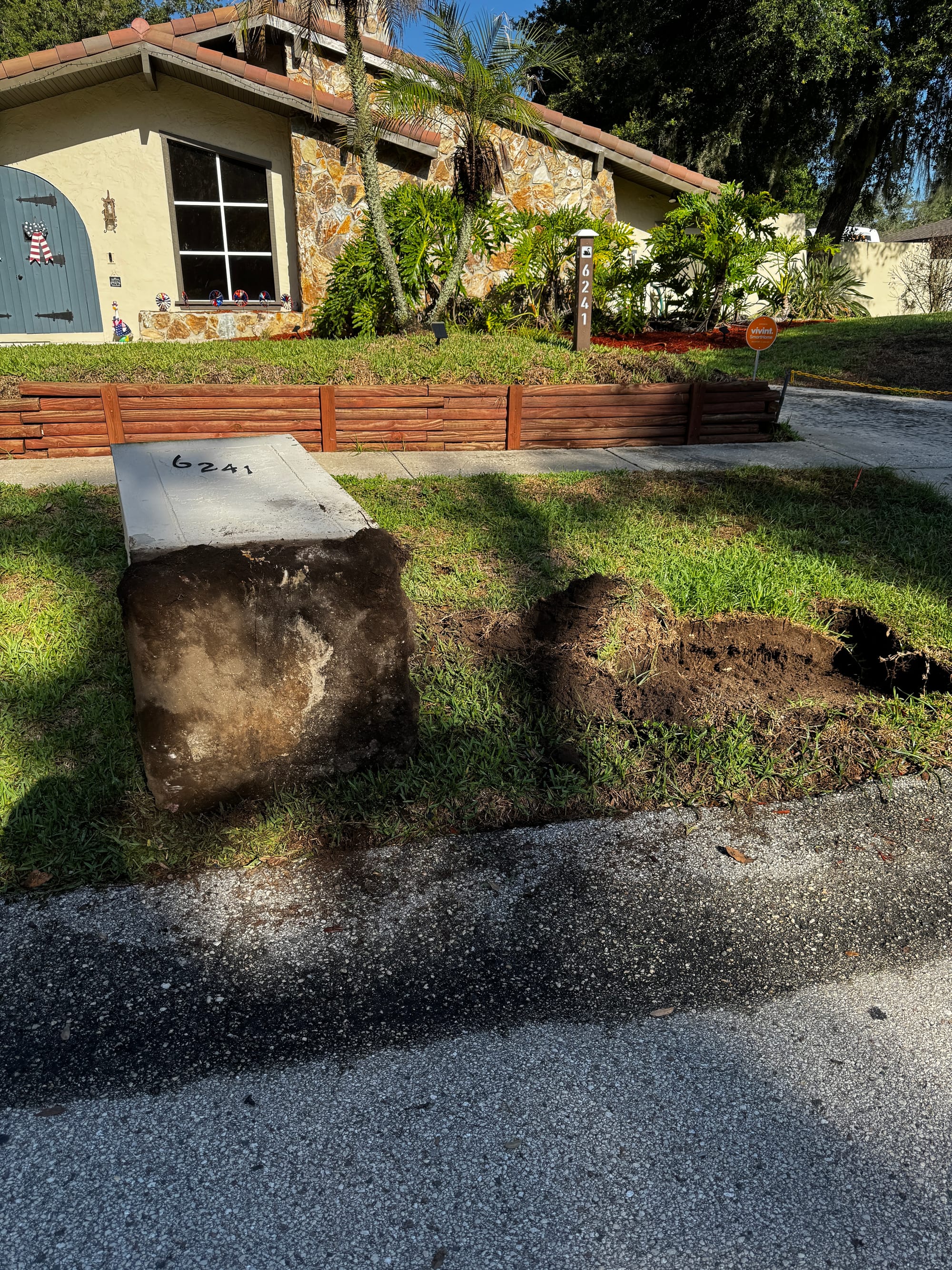
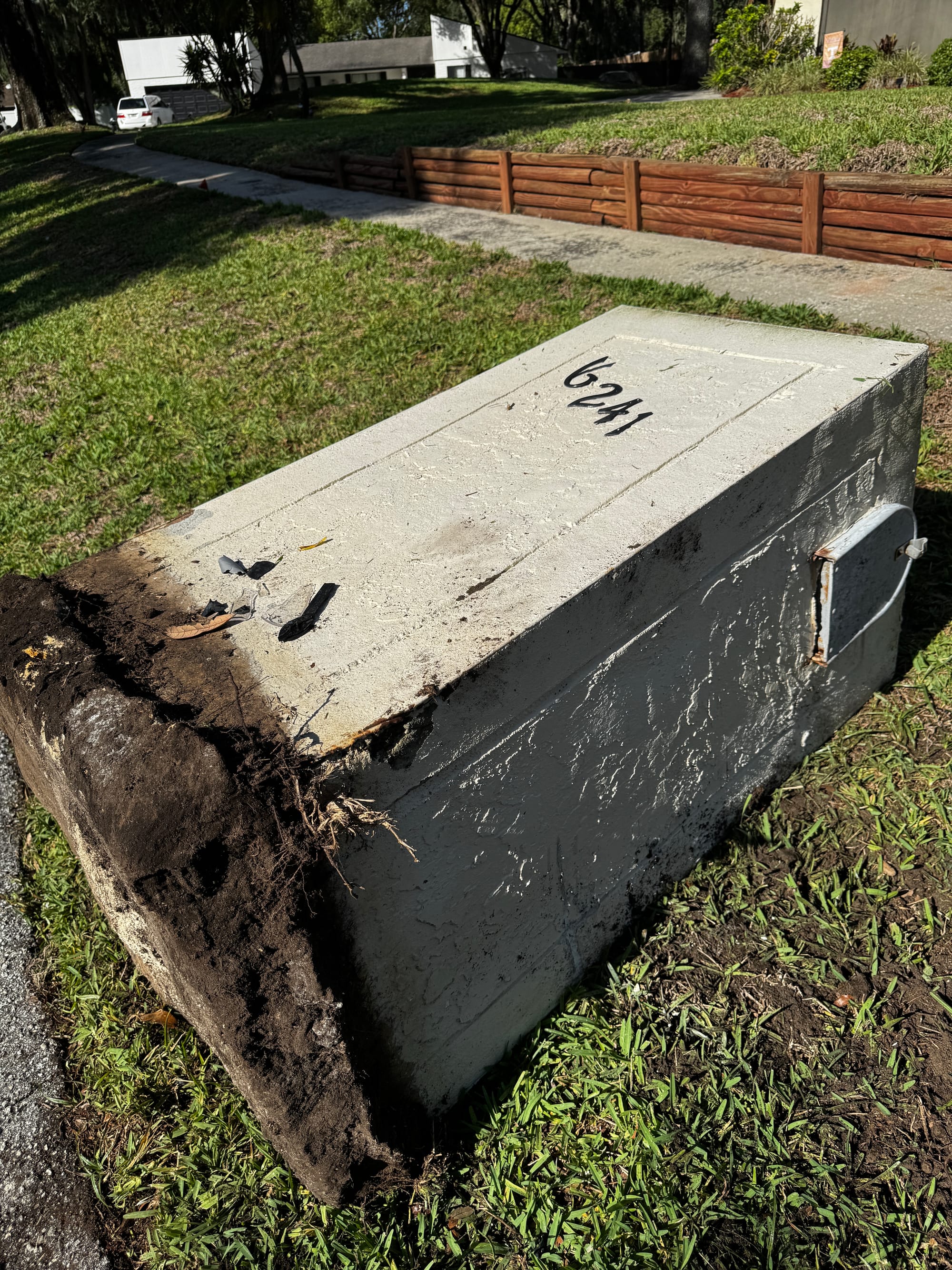
Calling it a mailbox is technically correct, but only technically. It's original to our house, built in 1975, and it's basically a giant concrete structure that also happens to hold mail. It's survived fifty years of Florida weather, including hurricanes, tropical storms, and everything else this state has thrown at it.
Thursday morning, it was lying on its side.
Completely uprooted.
My first reaction wasn't even anger.
It was confusion.
How?
Seriously... how?
How does something that's been standing in exactly the same spot since Gerald Ford was president suddenly end up horizontal?
The rest of the day unfolded pretty much the way you'd expect. Police report. Insurance claim. More pictures of a mailbox than I ever imagined taking in one lifetime. At one point I found myself saying, "I think I'm going to need someone with heavy equipment," which definitely wasn't on my Thursday bingo card.
Somewhere in the middle of all of that, the officer handed me the driver's information.
Date of birth: December 16, 2004.
I laughed.
Not because any of this was funny, although I have to admit there were moments when the absurdity of the whole situation wasn't lost on me. I laughed because my immediate thought was, Holy cow... I could literally be his mother.
But the more I've replayed the day in my head, the more I've realized that wasn't actually the moment that stayed with me.
I keep coming back to those six words.
Just... give the kid some grace.
Why?
I honestly don't know.
If you'd asked me the day before how I'd react if someone destroyed our mailbox, I don't think I would've answered that way. I probably would've imagined being frustrated that someone else's mistake had suddenly become my problem.
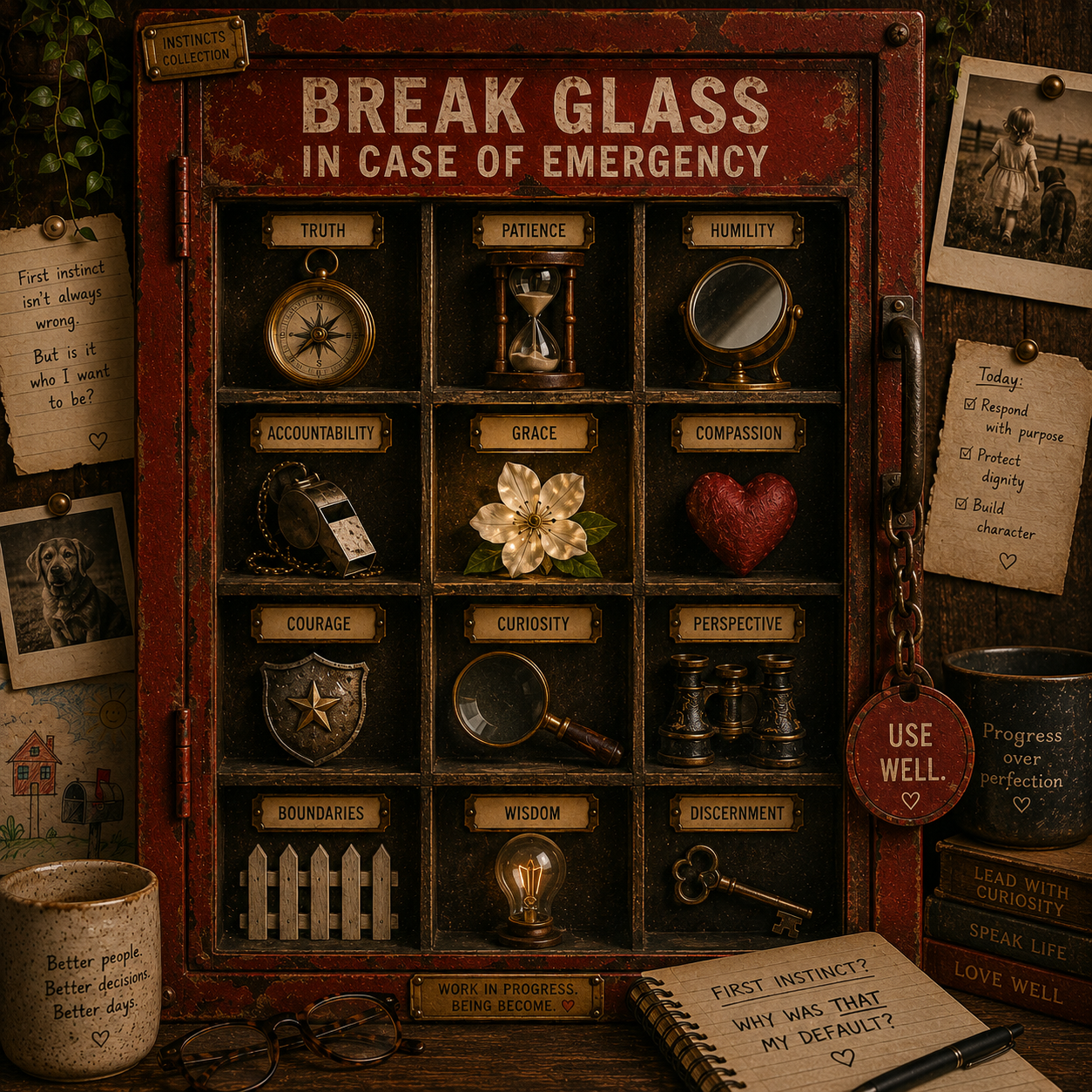
Instead, before I'd seen the damage, before I'd met the driver, before I knew he was only twenty years old, my first instinct was compassion.
That surprised me.
I've spent a lot of time trying to figure out why.
Maybe it's because I still remember what it feels like to be the one who has messed up. Not this particular mistake, obviously, but that feeling when you know you've created a problem you can't undo. The knot in your stomach. The way your mind races through every possible outcome before you've even had the conversation.
I have no idea what his drive over to our house was like that morning. Maybe he rehearsed what he was going to say ten different times. Maybe he almost turned around. Maybe he expected us to yell. Honestly, maybe he would've understood if we had.
I'll never know.
What I do know is that by the time he rang our doorbell, there probably wasn't anything I could have said that would've made him feel worse than he already did.
And that's the thought I haven't been able to shake.
Nothing about showing him grace changed what needed to happen next. We still called the police. We still exchanged insurance information. We're still filing the insurance claim, and his insurance should absolutely restore our property. Accountability matters.
But accountability and humiliation aren't the same thing.
I've been realizing that more and more over the last few years, and not just because of a mailbox.
I've noticed it in leadership, in the feedback conversations that, a few years ago, I probably would've dreaded having to lead.
I've noticed it in my marriage.
I've noticed it in parenting.
I've noticed it in friendships.
Apparently, I've even noticed it standing barefoot in my driveway staring at a four-thousand-pound concrete mailbox lying on its side.
Maybe that's the thread connecting all of those moments. The goal was never to make someone feel small, the goal was to help them grow, and those are two very different things.
A while back I wrote an essay about my tendency to fix things. For a long time, I thought that meant fixing people. Somewhere along the way, though, I think I started learning something different.
Most people don't actually need me to fix them.
Sometimes they need honesty.
Sometimes they need boundaries.
Sometimes they need consequences.
Sometimes they simply need someone to believe they're more than the worst decision they made this week.
I think that's why I keep coming back to this story.
The thing that needed fixing Thursday morning wasn't the young man standing on my front porch.
It was the mailbox.
That sounds almost laughably obvious.
Of course the mailbox was what needed to be repaired.
But I don't think we always separate the two as well as we'd like to believe. It's surprisingly easy to let someone's worst decision become their identity, at least in our own minds. We stop seeing a person who made a mistake and start seeing the mistake itself.
This time, somehow, I didn't.
I've been thinking about those six words ever since.
Just... give the kid some grace.
I didn't stop to think before I said them. I didn't weigh the options or decide it was the "right" response. They were simply the first words that came out of my mouth.
And I keep wondering where they came from.
Maybe that's what growth looks like.
Not the moments where we consciously decide who we want to be, but the ordinary ones where we discover, almost by accident, who we're already becoming.