All the Dogs I've Ever Loved

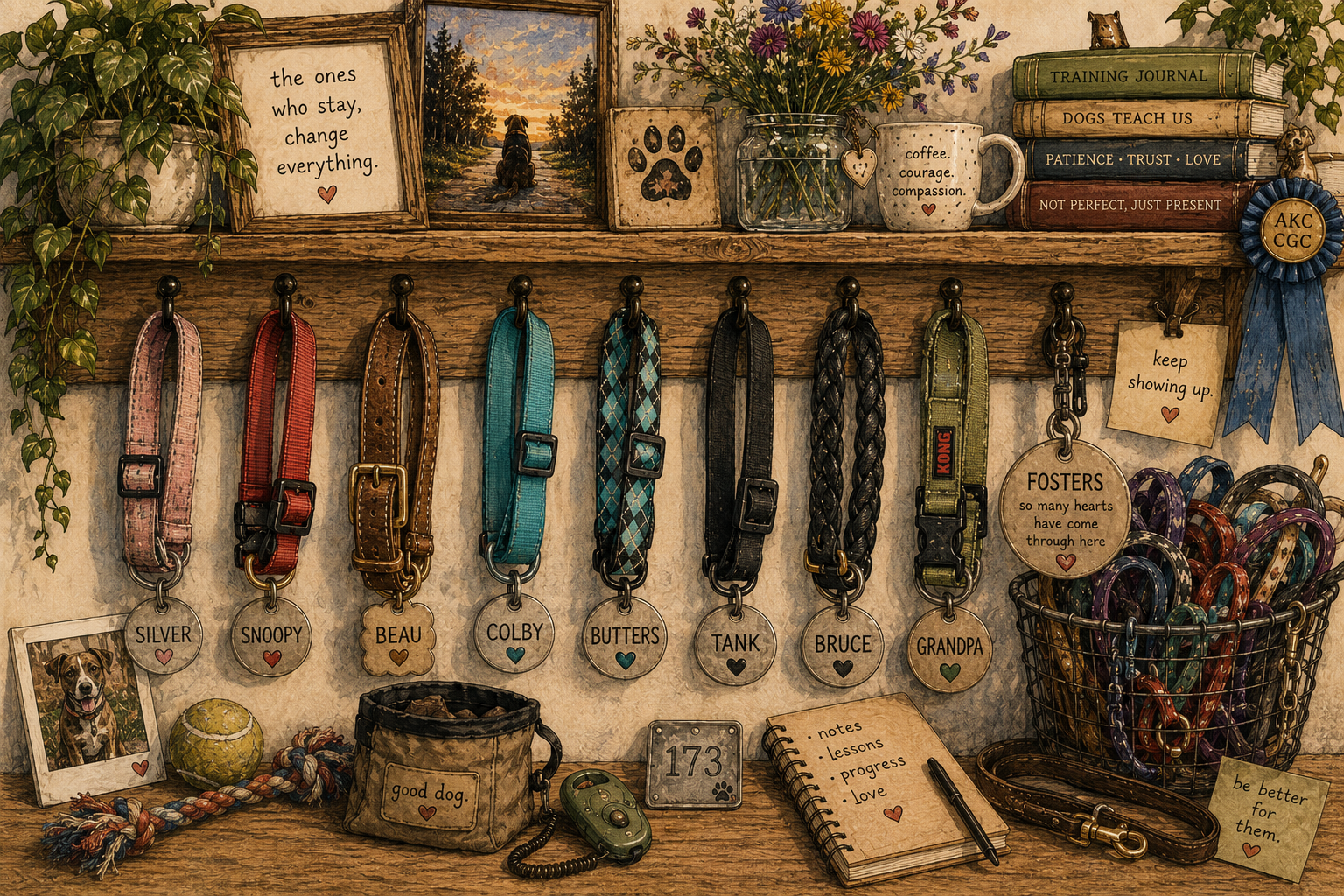
My parents have been looking for a dog for several weeks now, which has somehow become a family project. Every weekend we climb into the car and head to another shelter, convinced that maybe this one will be different.
The problem with shelter dogs is that you're trying to make a forever decision based on a fifteen-minute interaction in what is probably the least natural environment imaginable.
Imagine someone trying to decide if they wanted to spend the next fifteen years with you after meeting you in the middle of the worst season of your life. You haven't slept. You're stressed. You're surrounded by strangers. Everything familiar has been taken away. You don't know why you're there or how long you're staying.
That's basically a shelter.
Some dogs bark nonstop. Some bounce off the walls. Some completely shut down. None of them are behaving the way they would a month later after they've learned where the food bowl is, which couch they're allowed to sleep on, and that nobody is leaving them behind anymore. Which makes the whole process strangely unfair, because you aren't really evaluating the dog standing in front of you. You're trying to imagine the dog they'll become once they finally realize they're safe.
A few weeks ago my parents passed on a dog named Eileen. She was missing a leg, but otherwise she checked every box: calm, social, confident, wonderful with children, wonderful with other dogs. I still maintain she was the perfect dog for them.
Then yesterday we drove to Orlando to meet a 2-year-old medium sized dog we'd seen online.
Instead, the shelter employee introduced us to an eight-year-old pit bull named Gia.
Before I go any further, let me save everyone the trouble of writing the Facebook comments. This isn't a pit bull story. I've shared my home with pit bulls, an Australian Shepherd who routinely reminded me that intelligence and good decision-making aren't always the same thing, a 120-pound working-line livestock guardian dog who has never met a responsibility he wasn't willing to assume, and dozens of foster dogs and puppies who were only mine long enough to help them find someone else.
If anything, all of them have taught me that breed gives you clues. It doesn't tell you the story.
Gia wasn't intimidating.
She was heartbreaking.
She walked into the room with her tail tucked underneath her, stayed close to the wall, and looked like she wanted to disappear into the floor.
Then I read her Project Pets profile.
"Do not force socialization."
"Respect her boundaries."
"Allow her to approach people on her own terms."
I remember thinking every single recommendation made perfect sense.
I also remember looking over at Haisley, who was enthusiastically trying to show Gia...well...everything, and thinking, This is never going to work. Not because Haisley is wild. Because she's three. There's a difference.
Then I looked at my parents.
They've owned exactly one dog in their lives. She died more than twenty years ago. They're 82 and 69 years old, and they're looking for a calm companion to share this season of life with. They aren't looking for a behavioral project. They just want another dog to love.
Somewhere in the middle of that room, I realized everyone was trying to answer a different question.
My parents were trying to decide whether they could love Gia.
The shelter employee was trying to help Gia find a home.
I couldn't stop wondering whether my parents' home actually matched the life Gia's own behavioral plan described.
Nobody was wrong.
We just weren't solving the same problem.
The more I thought about it, the more I realized my brain does this with almost everything now. Dogs. Diabetes. Work. Somewhere along the way I stopped looking at what was happening and started asking what happens next.
Standing in that shelter, I wasn't really looking at the dog in front of me anymore. I was picturing Thanksgiving. I was picturing Haisley running through Grandma's front door after preschool. I was picturing Beau trying to make a new friend, Colby deciding everyone should be his new best friend, and Grandpa quietly observing from across the room until he'd gathered enough information to decide whether any of this required his attention. I was wondering what an ordinary Tuesday afternoon would look like six months from now, after the excitement of adoption had worn off and everyone had settled into whatever normal was going to be.
Meanwhile, my mom was standing right beside me looking at exactly the same dog and wondering whether she'd ever had someone who loved her.
Neither of us was wrong.
We just weren't imagining the same future.
That thought kept bringing me back to Eileen.
A few weeks ago my parents walked away from what I still maintain was the perfect dog for them.
Then yesterday they almost adopted Gia.
The more I thought about those two dogs, the less surprising it became. Eileen made them imagine how easily she'd fit into their lives. Gia made them imagine how much she needed one.
Those are completely different emotions.
I don't think my parents are unique in that. I think most of us are wired to respond to need. It feels compassionate. It feels generous. It makes us feel like we can change someone's story.
But compassion and compatibility aren't always the same thing.
That's the tension I haven't been able to shake. Loving a dog and being the right home for that dog are two different questions, and I don't know that we always recognize the difference until we're forced to.
We like to believe love fills in all the gaps.
A lifetime of loving dogs has taught me that sometimes love has to make room for reality too.
The reality is that love doesn't magically give someone twenty years of experience they don't have. It doesn't turn an energetic three-year-old into a child who can instinctively read canine body language. It doesn't change what a fearful dog needs simply because we want so badly to give it to her.
I honestly hope somebody walks into that meet-and-greet room tomorrow, reads every word of Gia's Project Pets profile, and smiles. Not because they think it'll be easy. Not because they think they can fix her. But because none of it intimidates them. Because they've walked this road before. Because they understand what "don't force socialization" actually looks like on an ordinary Tuesday afternoon. Because they aren't imagining the dog they wish she was, they're excited about the dog she already is.
Maybe that's what all the dogs I've ever loved, and a few I only borrowed for a little while, have been trying to teach me all along.
Sometimes the most compassionate thing you can do isn't say yes; sometimes it's recognizing when someone else is better equipped to.
Meanwhile...
...Gia is still waiting.
If this essay resonated with you because you've loved a fearful dog before, understand what "don't force socialization" actually means, or have the patience and experience to help a dog build confidence at her own pace, I'd love to connect you.
She isn't looking for just any home.
She's looking for the right one.
If you think that might be yours, or know someone whose life already looks like the one Gia is asking for, send me a message. I'll gladly share her information.